

 Nederlands
  Polski

If you live in a property with cavity walls, the phrase “wall tie failure“ might sound like a structural nightmare. However, it is a common issue with a very standard fix. Whether you’ve noticed horizontal cracking or you’re navigating a survey for a house purchase, here is a breakdown of why ties fail, how we inspect them, and what the replacement process actually looks like.
1. Why do Wall Ties fail?
In older properties, wall ties were typically made of galvanised steel. Over time, the protective zinc coating breaks down, allowing the steel to rust/corrode. As iron turns to rust (“oxidises”), it expands to several times its original thickness.
The Telltale Signs:
- Horizontal Cracking: This is the most common symptom. As the ties expand within the mortar joint, they physically lift the brickwork, causing horizontal cracks to appear, usually every 3-4 courses of bricks in the same courses where the wall ties were installed. This is known as “oxide jacking”. This is more noticeable at the top of a gable end wall where the weight of the brickwork is lighter.
- Roof Movement: A less obvious sign is the lifting of roof tiles on the ridge. If the brickwork has lifted significantly due to expansion, it can push the roof structure upwards, leading to a “lip” at the edge of the roof.
- Bulging Walls: In extreme cases, if the ties have snapped or thinned through corrosion, the outer leaf of the wall can pull away from the inner leaf, leading to a visible bulge.
2. The Survey Process: Peering into the Cavity
You cannot accurately diagnose wall tie failure from the outside alone. A professional surveyor will carry out an intrusive (but non-destructive) inspection.
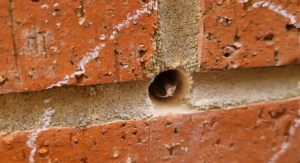
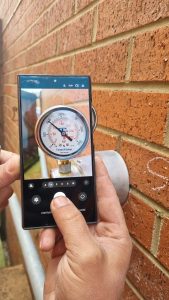
The Borescope Inspection: The surveyor drills a small, discreet hole into the mortar joint. They then insert a borescope (also known as an endoscope) – essentially a high-definition camera on a flexible cable – to look inside the cavity.
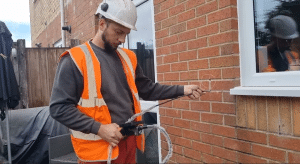
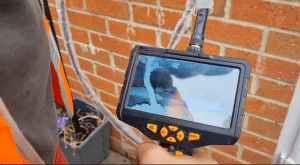
A Note on Insulation: If your home has cavity wall insulation (like polystyrene beads), this process can be a bit of a headache. The beads tend to pour out of the hole or swarm the camera lens, blocking sightlines. It requires a bit more patience and effort to clear a view, but for a skilled surveyor it is still perfectly doable.
The survey allows the surveyor to check:
- The physical condition and corrosion level of the existing ties.
- The “density” (quantity per area) of the ties. Builders occasionally “forgot” to install enough of them… and even sometimes don’t install any!
- The presence of debris or “snots” (mortar droppings) that might be bridging the cavity and causing damp.
Target Fixings’ technical team, and Target Structural installation teams are trained to carry out wall tie surveys, and can write a report on the condition of wall ties. If you are concerned, get in touch with our team and we can guide you through the process and provide you with a fully costed quote.
You are also more than welcome – in fact encouraged! – to have a look inside the cavity yourself.
3. The Solution: Remedial Wall Ties
If the survey confirms the ties are failing, don’t panic. This isn’t like subsidence which is often out of your control and linked to ground movement that can be unpredictable even after a repair is carried out. Wall tie replacement is an upgrade to your property’s structural integrity, and insurance is very unlikely to be affected.
The Replacement Process: We typically use Helical Wall Ties (such as our Retro Flex or Dri Flex systems). These are made from stainless steel and are designed to be retrofitted through the outer leaf of the brickwork.
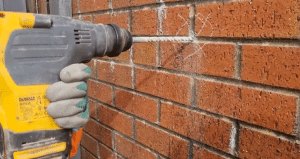
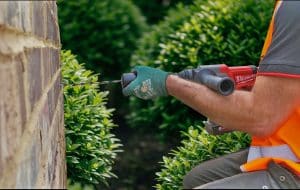
- Installation: With Retro Flex, holes are drilled through the outer leaf and the tie is hammer driven through the hole, creating a mechanical connection in the inner leaf. Polyester resin, or cementitious grout is used to chemically bond it to the outer leaf. It is also possible to hammer the tie through both leaves, using a Dri Flex.
- The Old Ties: It isn’t enough to just add new ties; the old, corroding ones must also be dealt with. They are either physically removed or “isolated” (covered with a foam sleeve or similar) to prevent further expansion from damaging the masonry.
- Accessibility: Usually, this is all done from the outside. While it theoretically can be done from the inside if the exterior is inaccessible, it results in a lot of holes… hardly ideal if you’ve just finished decorating!
4. Materials and Longevity
Modern remedial ties are a “fit and forget” solution because they are manufactured from stainless steel, providing a vast upgrade on corrosion resistance from galvanised steel.
- Standard Grade: Grade 304 stainless steel is the industry standard for most inland properties.
- Coastal Grade: If you live near the coast, we always recommend Grade 316 stainless steel. This has a much higher resistance to the “salt air” and sea water breezes that can accelerate corrosion even in modern materials.
Target Fixings only produces helical wall ties in stainless steel.
Final Thoughts
Wall tie replacement is a standard, routine fix that shouldn’t impact your ability to get insurance – in fact, it’s often a requirement of the surveyor to ensure the building remains insurable.
If you’re concerned about your property, we are always happy to quote for a survey. We’ll even let you have a look through the borescope yourself so you can see exactly what’s going on inside your walls!
Have you noticed cracking in your brickwork, or has a homebuyer’s report flagged wall ties? Request a solution now.
 English
  Nederlands
  Polski
Comments are closed